2026 Incentive Changes: Bigger Rebates for Commercial Solar and Battery
Quick answer: From 1 October 2026, the federal Small-scale Renewable Energy Scheme (SRES) expands from 100 kW to 1 MW — a tenfold increase — making much larger commercial solar systems eligible for the same upfront certificate-based rebate that homes and small businesses have used for years. The government estimates this commercial solar rebate could cut the upfront cost of an eligible system by around 20%. At the same time, NSW is expanding its battery incentives beyond homes to apartments, commercial and industrial systems. Together, these are the biggest changes to commercial solar and battery incentives in over a decade — though the SRES change remains subject to final regulations.
For businesses that have watched residential solar boom while commercial solar lagged, this is the shift that changes the maths. This guide explains what's changing, how much it could save, and what to do to make the most of it.
BESS Australia is an accredited supplier and installer of commercial solar and battery systems, supplying equipment Australia-wide, so we can help your business assess and access the expanded incentives.
What's changing: the SRES expands to 1 MW
From 1 October 2026, the federal SRES eligibility threshold rises from 100 kW to 1 MW, meaning commercial solar systems up to 1 MW can generate upfront small-scale technology certificates (STCs) for the first time. It's a tenfold increase in the size cap.
The SRES is the long-running federal scheme that has driven residential rooftop solar since 2011, by creating STCs — tradeable certificates that energy companies must buy, delivering an upfront discount on eligible systems. Until now, the 100 kW cap meant most commercial buildings were too large to qualify. The expansion, announced by the federal government in August 2026, lifts that cap to 1 MW. It's confirmed but remains subject to final regulations before the start date, so plan around it while keeping that caveat in mind.
How much could a business save?
The government estimates the expanded SRES could reduce the upfront cost of an eligible commercial solar system by around 20%, with its own examples suggesting savings in the order of tens to hundreds of thousands of dollars depending on system size. Actual savings depend on your project and the final scheme rules.
In figures released with the announcement, the government pointed to indicative savings of roughly $68,000 on a 250 kW system and around $232,000 on an 850 kW system — though these are government estimates, and your actual figure will depend on your system size, your site and the certificate market at the time. The scheme is expected to be budget-neutral, using the same market mechanism as residential solar. For businesses, it turns commercial solar from a long-payback consideration into a much stronger financial case.
Curious what your business could save? Talk to our commercial team about the expanded solar and battery incentives — call 1300 859 066, email sales@bessaustralia.com.au, or contact our commercial team.
The "missing middle" — why this matters
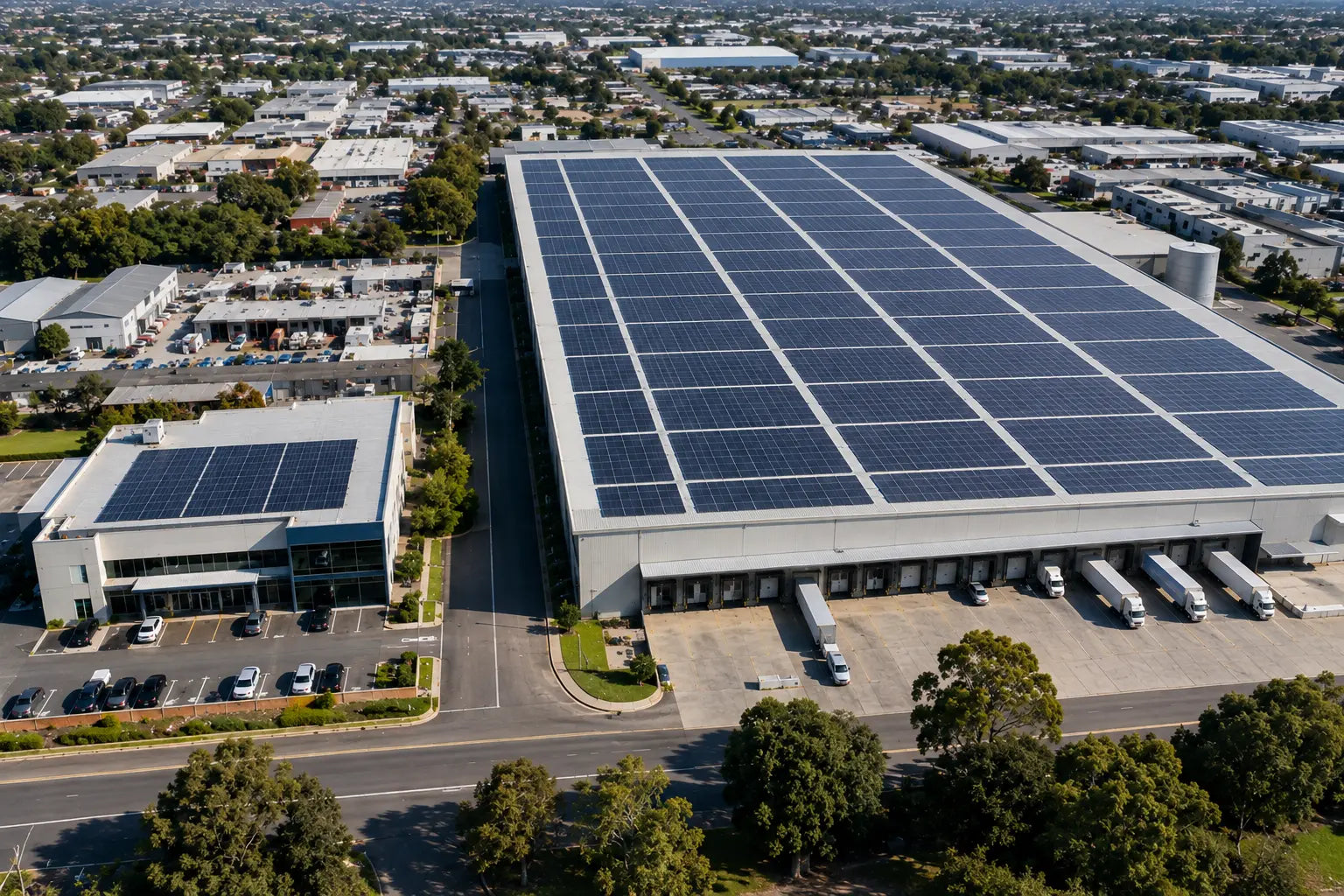
The expansion targets the "missing middle" of commercial rooftop solar — medium-scale systems between 100 kW and 1 MW that were previously too big for residential incentives but too small for large-scale support. These systems now qualify for upfront rebates.
This is the segment where a lot of real commercial demand sits: warehouses, factories, schools, farms, shopping centres, showrooms and office fit-outs. Australian businesses have installed only a fraction of their rooftop solar potential, and the 100 kW cap was a big reason why. By opening upfront certificate value to systems up to 1 MW, the change makes it far easier for these medium-scale projects to stack up financially. If your business has a large roof, it's now worth a fresh look at commercial solar panels.
NSW battery incentives are expanding too
Alongside the solar change, NSW is expanding its battery incentives beyond homes to cover apartment buildings, commercial sites and large-scale industrial installs, with new battery activities commencing from September 2026. The rules for combining incentives are more generous than many businesses realise.
NSW's battery incentives operate under the state's Peak Demand Reduction Scheme, which rewards installations that reduce peak grid demand by generating tradeable certificates. What began as a residential battery incentive is broadening to larger and commercial systems. Because the specific eligibility and activity rules are detailed and evolving, confirm the current NSW rules for your project — but the direction is clear: bigger battery incentives for business. This complements our commercial battery storage offering.
Stacking incentives: state and federal together
Eligible projects can often combine federal solar STCs with NSW battery incentives and, in some states, other programs — but whether and how incentives stack depends on the system, the activity and the current rules. Stacking is where the biggest value now sits.
The headline for 2026 is that solar and battery incentives are no longer isolated. A commercial project might draw federal certificate value on the solar and separate certificate value on the battery, materially lowering the total cost. The rules around eligibility and combining incentives are specific, though, so the value of stacking should be modelled for your actual project rather than assumed. Getting this right is exactly where an experienced commercial installer earns its keep.
Batteries and solar: what's covered by what
The SRES expansion applies to solar PV up to 1 MW; federal battery support remains focused on systems up to 100 kWh under the Cheaper Home Batteries Program, while NSW runs its own battery incentives. Keeping the schemes straight matters for planning.
It's a common point of confusion, so to be clear: the 1 MW change is about solar generation capacity. Federal battery support — the Cheaper Home Batteries Program, designed to take around 30% off eligible batteries and reducing over time through to 2030 — still applies to systems up to 100 kWh, and NSW's battery incentives are a separate state scheme. If you're adding solar to a site with a battery, or designing a hybrid system, the incentives come from different places and are assessed separately.
Predictable pricing: the 5-year deeming lock
For newly-eligible commercial solar systems between 100 kW and 1 MW, the certificate deeming rate is set for five years and held through to 2030, giving businesses more predictable incentive value than residential STCs, which step down each year. That certainty helps the business case.
Because residential STC value declines annually, homeowners face a "sooner is better" clock. For the new 100 kW–1 MW commercial band, holding the deeming rate steady through 2030 means you can model certificate value with more confidence when building a long-term return-on-investment case. For a business weighing a significant capital decision, that predictability is genuinely useful — though final figures still depend on the certificate market and the confirmed rules.

What businesses should do now
To make the most of the changes, assess your roof and load, model the numbers for your site, and plan any install around the 1 October 2026 start — since eligibility is expected to be tied to the connection date. Preparation beats reacting after the rush.
-
Assess your site. Roof space, orientation, structure and your electrical supply determine what's feasible.
-
Model your usage and demand. Your load profile and demand charges shape the ideal system size and the value of adding a battery.
-
Plan around the start date. Eligibility for the expanded SRES is expected to depend on the system being connected on or after 1 October 2026, subject to final rules.
-
Get expert commercial advice. Larger systems, grid connection and incentive stacking are more complex than a residential job — professional design matters.
A note for installers and trade
Electricians and installers can access commercial-grade solar and storage with trade pricing and Australia-wide delivery to take on the larger projects these changes unlock. The expanded thresholds mean bigger jobs.
For trade and project work, our commercial products and storage ranges cover the major brands with trade pricing and delivery to suit medium-scale commercial installs. As the 100 kW–1 MW segment opens up, having a reliable supply partner for larger systems becomes more valuable.
How BESS Australia helps businesses access the incentives
BESS Australia is an accredited supplier and installer of commercial solar and battery systems, supplying Australia-wide. We assess your site and load, design a system sized to your business, and help you navigate the expanded SRES and NSW battery incentives — so the available support is reflected in your project rather than left on the table.
Our trust signals are straightforward: CEC-approved products (you can find industry guidance via the Clean Energy Council, and the Clean Energy Regulator administers the certificate schemes), Smart Energy Council membership, the NETCC Approved Seller consumer-protection code, installation by Solar Accreditation Australia-accredited installers, manufacturer warranties, a workmanship warranty, and Australian Consumer Law protections. We also offer a Lowest Price Guarantee, finance options and rebate assistance. Any savings figures are estimates that depend on your project, site and the final scheme rules — never guarantees.
Get ahead of the 1 October change. Ask BESS Australia's commercial team to model the expanded incentives for your site — call 1300 859 066, email sales@bessaustralia.com.au, or request a commercial quote.
FAQ
What is the SRES expansion to 1 MW? From 1 October 2026, the federal Small-scale Renewable Energy Scheme (SRES) increases its eligibility threshold from 100 kW to 1 MW — a tenfold rise. This means commercial solar systems up to 1 MW can generate upfront small-scale technology certificates (STCs) for the first time, giving medium-scale commercial solar the same certificate-based discount homes have long used. It remains subject to final regulations.
How much could my business save on commercial solar? The government estimates the expanded SRES could reduce the upfront cost of an eligible commercial solar system by around 20%, with examples in the order of $68,000 for a 250 kW system and $232,000 for an 850 kW system. These are estimates — your actual saving depends on your system size, site and the certificate market at the time.
When does the commercial solar rebate change start? The expanded SRES is expected to commence on 1 October 2026, subject to final regulations. Eligibility is expected to be tied to the system's connection date, so systems connected on or after that date should qualify under the higher 1 MW cap. Smaller systems under 100 kW remain eligible now, as they always have been.
Does the change cover batteries? No — the 1 MW SRES expansion applies to solar PV capacity. Federal battery support remains focused on systems up to 100 kWh under the Cheaper Home Batteries Program, and NSW runs its own separate battery incentives, which are expanding to commercial and industrial systems. If you're planning solar and a battery together, the incentives are assessed separately.