
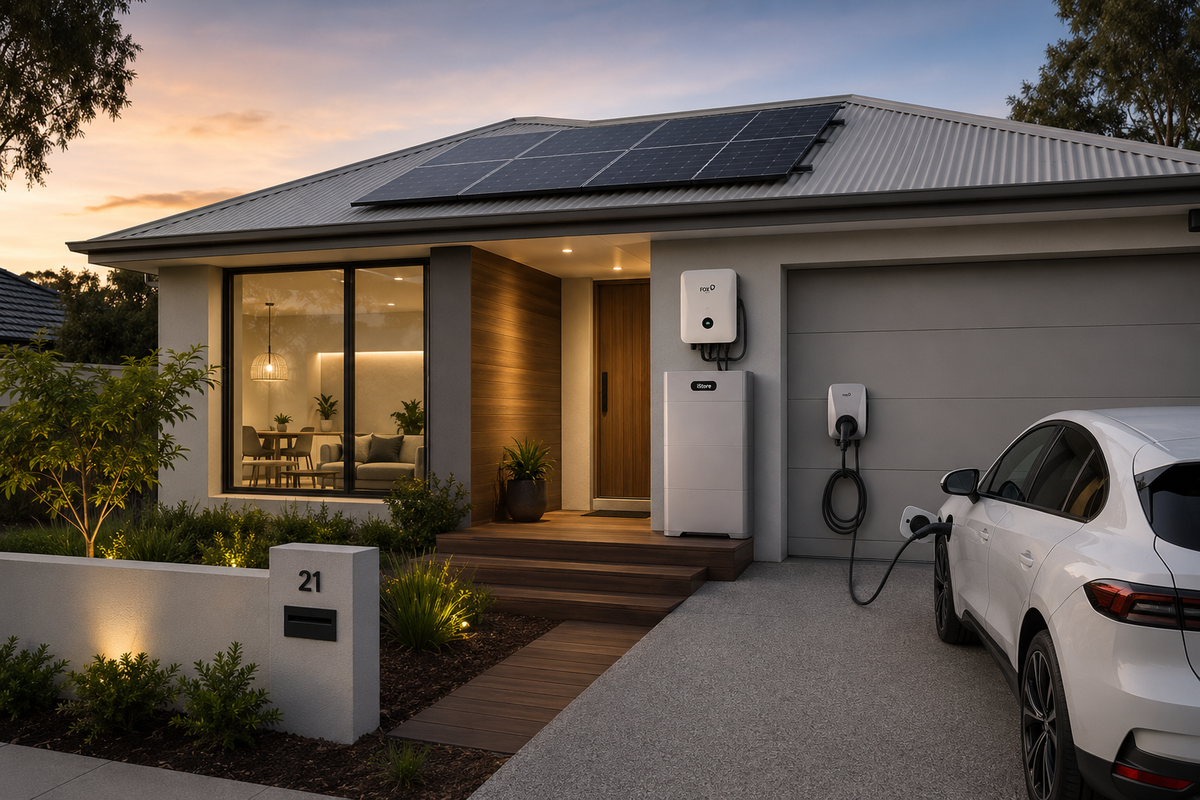
Quick answer: Home electrification means replacing your home's gas and petrol appliances with efficient electric ones, ideally powered by your own solar. For most households the smart order is solar first, then high-value upgrades like heat-pump hot water, a battery, and EV charging — but the right starting point depends on your home, your existing solar and what you're trying to fix first. A staged home electrification plan lets you spread the cost while building toward lower bills and greater energy independence.
You don't have to do everything at once. The key is a roadmap that puts each upgrade in a sensible order, so every step supports the next instead of locking you into the wrong system. This guide lays out that roadmap, with a simple way to decide where to begin.
BESS Australia is an accredited, multi-brand supplier and installer of solar panels, home batteries, EV chargers and heat-pump hot-water systems — a genuine one-stop provider for electrifying your home — supplying Australia-wide and installing across Brisbane, the Sunshine Coast, the Gold Coast, Sydney and Melbourne.
What is home electrification?
Home electrification is the process of swapping fossil-fuel appliances — gas heating, gas hot water, gas cooktops and petrol cars — for efficient electric alternatives, then powering them with renewable electricity, ideally your own rooftop solar. The goal is to reduce or remove your reliance on gas and grid power.
Done well, it lowers running costs, cuts emissions, and can let you disconnect gas entirely to save the daily gas supply charge. The Australian Government's Your Home guidance is a good neutral reference on efficient, all-electric home design. The appeal is simple: generate your own energy by day, store and use it across your home, and stop paying for two energy networks when one will do.
What should I install first: solar, battery or EV charger?
For most homes, solar panels come first, because they're the foundation that powers every other electric upgrade — but the best first step depends on your situation. If you already have solar, the next step is usually a battery or the upgrade that fixes your biggest cost.
Use this quick guide to find your starting point:
|
Your situation |
Sensible first step |
|
No solar yet |
Solar panels — the foundation that powers everything else |
|
Ageing or expensive gas hot water |
Heat-pump hot water, to soak up daytime solar |
|
Solar already, high evening bills |
A home battery, to store daytime solar for the evening |
|
Just bought (or about to buy) an EV |
A home EV charger, plus checking your solar is big enough |
|
Still on gas heating and cooking |
Plan the switch to reverse-cycle and induction over time |
There's no universal "correct" order — only the order that suits your home, budget and priorities. A site assessment helps sequence it around what will save you the most, soonest.
The home electrification roadmap, step by step
A typical home electrification roadmap moves through six stages: understand your usage, add solar, electrify hot water, add a battery, add EV charging, then replace gas heating and cooking. You can stop at any stage or combine steps — the sequence simply keeps each upgrade working with the last.
- Understand your usage. Check your bills and current tariff, and tackle quick efficiency wins like LED lighting and draught-proofing. This sets the right size for everything that follows.
- Install solar panels. Solar is the foundation — it generates the electricity that powers your hot water, battery and EV. Size it with future loads in mind, not just today's usage.
- Switch to heat-pump hot water. A heat-pump hot-water system uses a heat pump to heat water and is typically around three to four times more efficient than a standard electric element. Because hot water is one of the biggest energy users in many homes, running it on daytime solar is one of the highest-value early moves.
- Add a home battery. A battery stores your daytime solar for the evening, lifting your self-consumption and adding blackout backup (configuration-dependent). Browse home battery systems to see capacity options.
- Add EV charging. A home EV charger lets you charge your car from your own solar — the single biggest load you can shift onto free daytime energy.
- Replace gas heating and cooking. Reverse-cycle air-conditioning and an induction cooktop complete the switch, and can let you disconnect gas and drop its supply charge.
Want a roadmap built around your home? Get a staged electrification plan from BESS Australia — call 1300 859 066, email sales@bessaustralia.com.au, or request a tailored quote.
How do I plan a fully electric home?
To plan a fully electric home, work backwards from the loads you'll eventually run — EV, heat pump, electric heating — and size your solar, inverter and switchboard to support them, even if you add the appliances later. Planning for the end state avoids paying twice to upsize.
A few principles make this work. Choose a hybrid inverter — one that manages both solar and battery — so your system is battery-ready from day one. Leave headroom in your solar array and switchboard for future loads. And sequence the upgrades to your budget, using finance to spread the cost if it suits you (finance is an option, not financial advice — confirm the terms before committing). The result is a home that gets cheaper to run with each stage, rather than a series of one-off purchases that don't connect.
Can one solar system power an EV and a heat pump?
Yes — one solar system can power an EV and a heat pump, provided the array is sized for the extra load and the appliances are scheduled to run on daytime solar. The trick is timing and capacity, not magic.
Self-consumption — using the solar you generate rather than exporting it — is the goal here. Heat-pump hot water and EV charging are both flexible loads you can shift into the middle of the day when your panels are producing, which keeps that energy on your side of the meter. A larger array (and often a battery) gives you enough surplus to cover both, while smart scheduling stops them competing. If you're running heavy loads, sizing should be confirmed against your real usage rather than assumed.
Future-proofing your system
Future-proofing means sizing your solar, inverter and switchboard today for the EV, battery and electric appliances you'll add tomorrow — so each upgrade plugs in without re-doing the last. It's far cheaper to allow for growth upfront than to upgrade an undersized system later.
In practice that means a slightly larger solar array than today's bills demand, a battery-ready hybrid inverter, and switchboard capacity for future circuits. It's the difference between a home that's genuinely ready for electrification and one that needs expensive rework at every stage.
The payoff: lower bills, energy independence, less gas
A well-planned electric home can substantially cut energy costs by replacing gas and peak grid power with your own solar — though the savings are estimates that depend on your household, usage and tariff. The benefits compound as you add each stage.
Beyond the bill, you gain energy independence, blackout resilience with a battery, and the option to remove gas entirely and its standing charge. Every load you shift from gas or peak grid power to daytime solar is one you stop paying full price for — which is why electrification tends to look better the further along the roadmap you go.
How BESS Australia helps you electrify your home
BESS Australia is an accredited supplier and installer of solar, battery, EV-charging and heat-pump hot-water systems, offering complete supply-and-install packages as well as equipment-only supply Australia-wide. Because we cover the whole electrification journey — and carry tier-1 brands like GoodWe, Fox ESS, Sigenergy, Tesla, BYD and Sungrow under one roof — we can plan your stages as one connected system rather than a series of disconnected jobs.
Our trust signals are straightforward: CEC-approved products, Smart Energy Council membership, the NETCC Approved Seller consumer-protection code, installation by Solar Accreditation Australia-accredited installers, manufacturer warranties, a workmanship warranty, and Australian Consumer Law protections. We also offer a Lowest Price Guarantee, finance options and rebate assistance — the Australian Government's Cheaper Home Batteries Program provides a discount toward eligible battery installations, and that discount reduces over time through to 2030, so the battery stage is worth planning sooner. Eligibility depends on the product, install and current rules.
Start your roadmap. Ask BESS Australia to map your home's electrification stages around your budget and priorities — call 1300 859 066, email sales@bessaustralia.com.au, or use our request a tailored quote form. We'll assess your home and recommend the smartest order to electrify.
FAQ
What should I install first: solar, battery or EV charger? For most homes, solar comes first because it powers every other upgrade. If you already have solar, a battery is usually the next step to cut evening bills, while a new EV points to a charger plus a check that your solar is big enough. The best first step depends on your home and biggest cost.
How do I plan a fully electric home? Work backwards from the loads you'll eventually run — EV, heat pump, electric heating — and size your solar, inverter and switchboard to support them, even if you add appliances later. Use a battery-ready hybrid inverter, leave headroom for growth, and sequence upgrades to your budget. A site assessment turns this into a staged plan.
Can one solar system power an EV and a heat pump? Yes, provided the array is sized for the extra load and both run on daytime solar. Heat-pump hot water and EV charging are flexible loads you can schedule for the middle of the day to maximise self-consumption. A larger array, and often a battery, gives you enough surplus to cover both comfortably.
Will electrifying my home really lower my bills? It can, by replacing gas and peak grid power with your own solar and removing the gas supply charge if you disconnect gas. Savings are estimates that depend on your household, usage and tariff, and they grow as you complete more of the roadmap. A tailored assessment gives you a realistic picture for your home.