
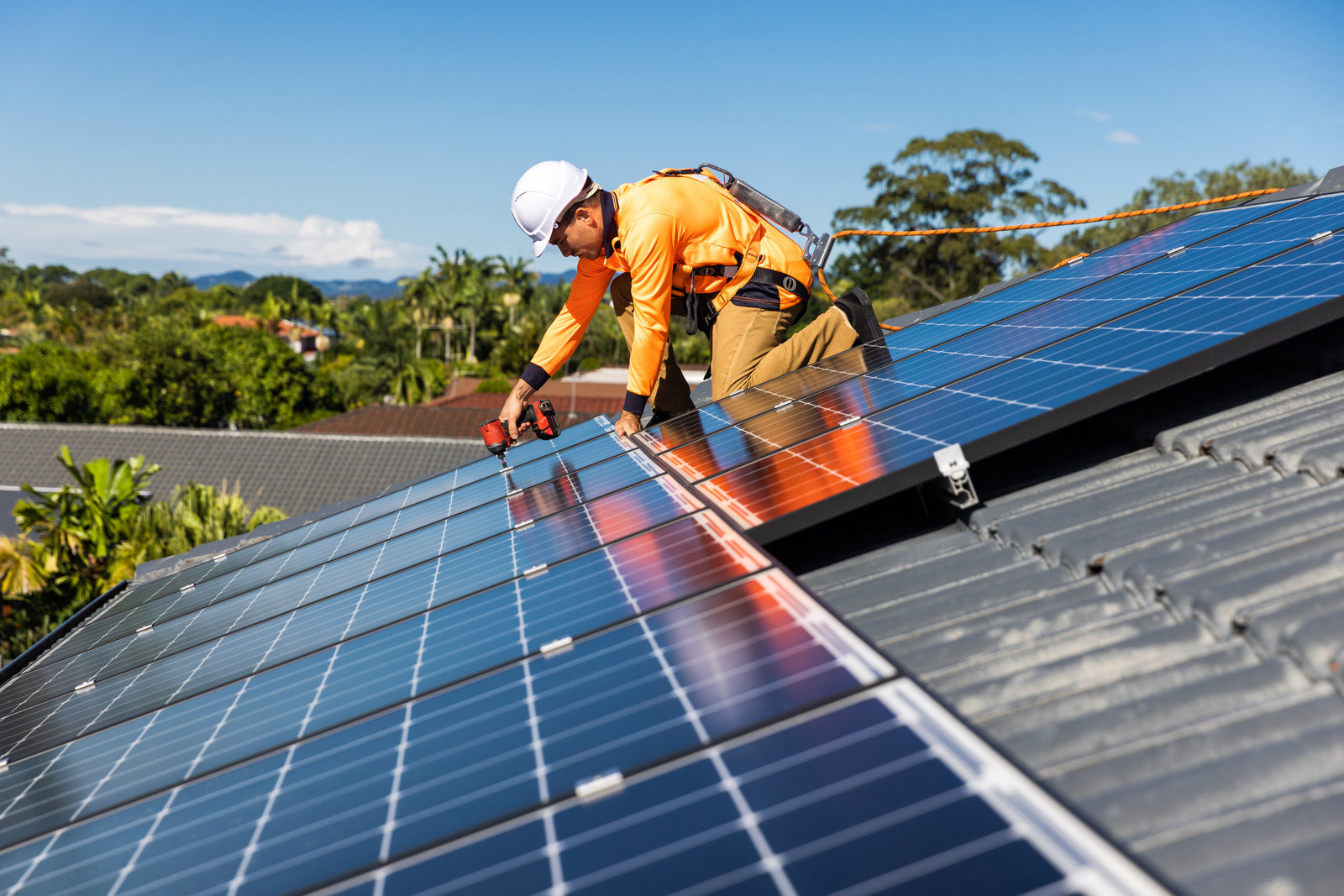
This blog post explores how smart home integration and advanced solar PV technology are transforming Australian properties into efficient, future-proof energy hubs. It provides a detailed comparison of panel types, guidance on coastal durability, and strategies for maintaining peak performance through seasonal optimisation and smart automation.
Here are the topics we cover:
- Durability in harsh and coastal Australian climates.
- Comparing monocrystalline versus polycrystalline solar panel efficiency.
- Automating appliances through smart solar energy integration.
- Optimizing off-grid setups for remote energy independence.
Imagine walking into your home and activating your security, setting your ideal temperature and heating your favourite beverage at the touch of a button. This is the age of smart homes, and the market is expected to grow to 4.5 billion dollars in revenue this year.
As Australian homeowners look for ways to economically future-proof their properties, solar PV panels are making smart home solar integration easier. From monitoring energy flows in real time to automating when appliances draw power, it’s a synergy that is reshaping how Australians live. BESS Australia has all you need to know.
How Do Solar PV Panels Perform in Coastal or Harsh Australian Climates?
In coastal regions like the Gold Coast, salt-laden air can accelerate corrosion on panel frames and mounting hardware, but this does not mean end-game; it just means that material quality is critical.
Modern solar PV panels are engineered to withstand high UV exposure, coastal humidity and extreme heat. Look for panels with IP68 weatherproofing ratings and corrosion-resistant aluminium frames and choose panels from reputable manufacturers with Australian-standard certifications.
What Is the Difference Between Monocrystalline and Polycrystalline Solar Panels?
It is important that you choose wisely between monocrystalline solar panels and polycrystalline solar panels. The table below will help you to decide:
|
Monocrystalline Panels |
Polycrystalline Panels |
|
Made from a single, continuous crystal structure. |
Made from multiple, melted silicon fragments (grain boundaries). |
|
Uniform dark black colour with rounded cells. |
Blue hue with a speckled, square checkerboard look. |
|
Higher efficiency (18–23%+) and better in high heat. |
Lower efficiency (13–17%). |
|
Residential rooftops and limited space. |
Budget-conscious projects and large ground mounts. |
|
Higher power output per square meter. |
Lower efficiency and less effective in high heat. |
How Can I Integrate Solar PV Panels with Smart Home Energy Systems?
Smart home solar integration allows your home to respond intelligently to energy production and consumption patterns. Through inverters with built-in Wi-Fi and energy management platforms, you can automate the following:
- Dishwasher
- EV charger
- Hot water system
- Security
- Lights
- Air-conditioning
This way, you prioritise solar-generated power during peak production hours. Battery storage systems can be programmed to charge during the day and discharge at night. Real-time dashboards display generation, usage and grid export, making it easier to maximise every kilowatt your panels produce.
What Are the Best Solar PV Panel Setups for Off-Grid Australian Properties?
For rural and remote properties, off-grid solar systems offer complete energy independence. A well-designed off-grid setup combines high-capacity solar PV panels, lithium battery storage and a hybrid inverter capable of managing multiple power sources. Make sure your system is sized to cover daily consumption plus a buffer for overcast days. Some off-grid homeowners use a diesel generator for backup during extended low-sun periods.
At BESS Australia, you will find some of the best solar PV panels, including:
How Can Seasonal Optimisation Improve the Output of Solar PV Panels?
Let’s talk about solar panel efficiency optimisation through the seasons. In winter, tilt your panels at a steeper angle to capture more of the lower sun arc, while summer calls for adequate ventilation to prevent heat-related efficiency loss. Make full use of your smart home by using monitoring systems to flag underperforming panels caused by shading, soiling or micro-inverter faults. You can also digitally schedule routine cleaning and review your energy data quarterly for a system that performs at its best year-round.
Explore the range of at BESS Australia and find the solution that fits your home and your energy goals. Shop now at BESS Australia and start generating smarter.