
Virtual Power Plants in Australia: Should You Join One?
Quick answer: A virtual power plant (VPP) is a network of home batteries that an operator coordinates remotely, drawing on your stored energy during periods of high demand to support the grid — and paying you credits or payments in return. Joining a virtual power plant in Australia is optional and depends on your priorities: it can earn you money and support the grid, but it means giving the operator some control of your battery. Importantly, the federal battery rebate requires your battery to be VPP-capable, but it does not require you to actually join a VPP.
VPPs are one of the more confusing parts of buying a battery, partly because "VPP-capable" and "joining a VPP" get muddled. This even-handed guide explains what a VPP is, the genuine pros and cons, and exactly how it relates to the rebate — so you can decide what's right for your home.
BESS Australia is an accredited, multi-brand supplier and installer of home battery systems, supplying Australia-wide and installing across Brisbane, the Sunshine Coast, the Gold Coast, Sydney and Melbourne — and the batteries we supply are VPP-capable, whether or not you choose to join one.
What is a virtual power plant?
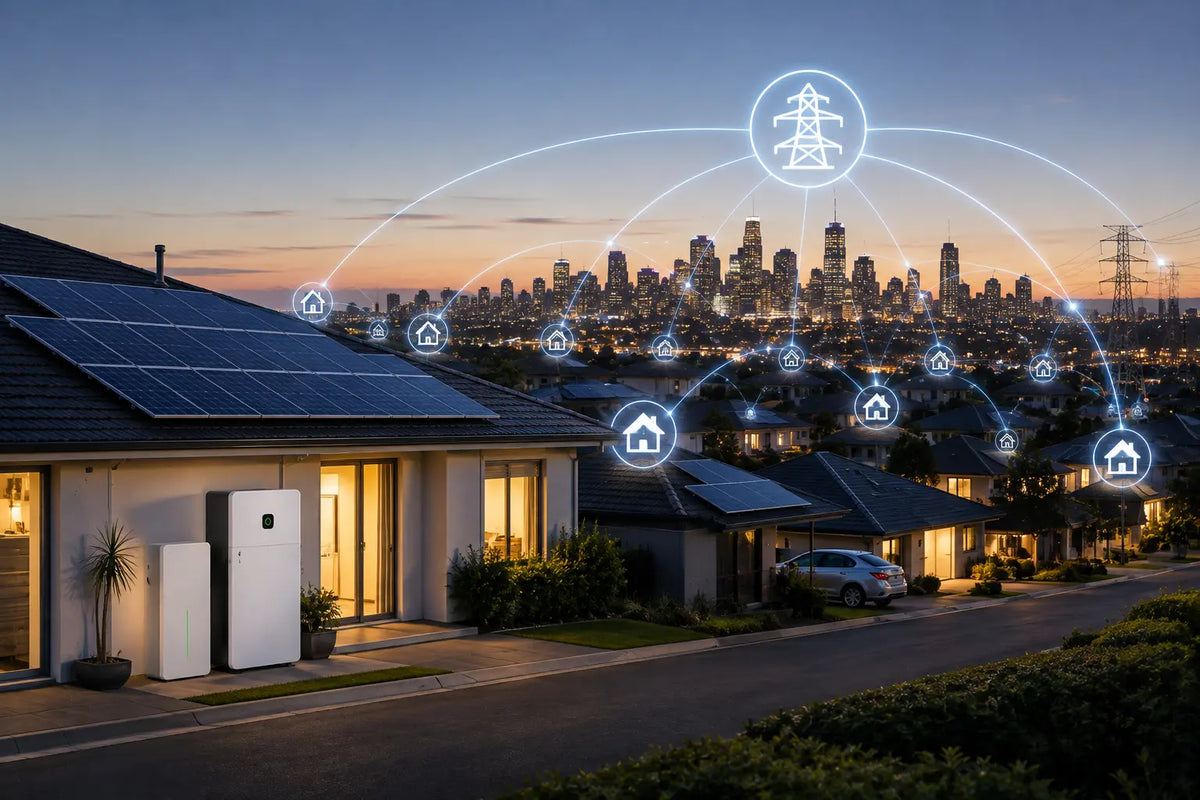
A virtual power plant is a network of home batteries — and sometimes solar — that a VPP operator can coordinate remotely, drawing on the combined stored energy during peak demand to help stabilise the grid, in exchange for payments or credits to participating households. In effect, thousands of home batteries act together like one large power station.
The idea is simple: instead of the grid relying only on large generators, a VPP taps small amounts of energy from many home batteries at once when demand is high or supply is tight. You get paid or credited for the energy your battery contributes, and the grid gets a flexible, distributed source of power. It's a growing part of Australia's shift to a decentralised, renewable energy system.
How does a VPP work?
When you join a VPP, the operator can discharge a portion of your stored energy during peak demand or grid events, then compensates you with credits or payments — usually while leaving a reserve of charge for your own use. You keep using your battery normally the rest of the time.
Most reputable VPPs let you set or guarantee a minimum reserve, so the operator can't empty your battery and leave you without backup. The specifics — how often your battery is used, how much is drawn, and how you're paid — vary between providers. That variation is exactly why the terms matter more than the headline, which we'll come to below.
Do I have to join a VPP to get the battery rebate?
No — you don't have to join a VPP to get the federal battery rebate. The rebate requires your battery to be VPP-capable at installation, meaning it could join a VPP if you chose to, but you're not required to actually enrol. This is the single most common point of confusion.
Under the federal Cheaper Home Batteries Program, on-grid batteries must be VPP-capable to qualify — a technical requirement that keeps your options open for the future. Whether you ever join a VPP is entirely your choice, and it doesn't affect your rebate eligibility. Rebate eligibility depends on the product, install and current rules, and the discount reduces over time through to 2030.
Want a VPP-capable battery, VPP or not? Get one matched to your home — call 1300 859 066, email sales@bessaustralia.com.au, or request a tailored quote.
VPP pros and cons
Joining a VPP can earn you credits and support the grid, but it means giving the operator some control of your battery and may leave less stored energy for your own use. Weighing both sides is the whole decision.
|
Pros of joining a VPP |
Cons / considerations |
|
|
Money |
May earn credits, payments or sign-up incentives |
Payments vary by provider and aren't guaranteed; terms can change |
|
Control |
— |
The operator can discharge part of your battery at peak times |
|
Grid & community |
Supports grid stability and the energy transition |
May leave less stored energy for your own evening peak or backup |
|
Battery |
Some VPPs offer discounted energy plans or subsidised batteries |
Extra cycling may affect long-term wear — check your warranty |
|
Commitment |
— |
Contract length and exit terms vary, so read them carefully |
The right balance is personal. If earning some income from your battery and supporting the grid appeals, a VPP with a solid reserve guarantee can suit you well. If you value full control and maximising your own self-consumption or backup, you might prefer to stay VPP-capable but not enrolled.
Should I join a VPP?
Whether you should join a VPP depends on your priorities: it suits households that value the payments and grid support and are comfortable with the operator using part of their battery, and suits less those who want maximum control, self-consumption or backup. There's no universally right answer.
Self-consumption — using your own solar rather than exporting it — is where most of a battery's savings come from, so if a VPP would frequently discharge energy you'd rather keep for your own evening peak, that's a genuine trade-off to weigh against the VPP payments. The best approach is to compare a specific VPP's terms against how you actually use your battery, rather than joining (or dismissing) VPPs in general.
What to check before joining a VPP
Before joining a VPP, check the reserve, the payment terms, how much control you keep, the contract length, and any effect on your battery warranty. The detail decides whether it's worth it.
-
The reserve — how much charge the VPP guarantees to leave for you.
-
Payments and terms — how you're paid or credited, and whether it's guaranteed or variable.
-
Control — when and how often the operator can use your battery.
-
Contract length and exit terms — how long you're committed and how to leave.
-
Battery warranty — whether VPP cycling affects your manufacturer warranty.
-
Eligibility — your battery, inverter and retailer all need to be compatible.
VPP participation is a personal financial and lifestyle decision, not financial advice — so confirm the terms with the specific provider before signing up.
VPP-capable vs VPP-enrolled: the difference
A VPP-capable battery has the technical ability to join a virtual power plant if you choose to; a VPP-enrolled battery is one you've actually signed up to a program. The rebate needs the former, not the latter. Keeping them separate clears up most of the confusion.
Choosing a VPP-capable battery future-proofs your system: you meet the rebate requirement now, and you keep the option to join a VPP later if a program with good terms comes along — without being locked into anything today. Many of the batteries in our GoodWe battery range and across our other tier-1 brands are VPP-capable, so you're covered either way.
How BESS Australia helps you decide
BESS Australia is an accredited supplier and installer of home battery systems, offering complete supply-and-install battery packages as well as equipment-only supply Australia-wide. Every battery we supply meets the rebate's VPP-capable requirement, and because we're multi-brand, we can help you choose a system that suits your home first — then leave the VPP decision entirely to you.
Our trust signals are straightforward: CEC-approved products (you can find consumer guidance via the Clean Energy Council), Smart Energy Council membership, the NETCC Approved Seller consumer-protection code, installation by Solar Accreditation Australia-accredited installers, manufacturer warranties, a workmanship warranty, and Australian Consumer Law protections. We also offer a Lowest Price Guarantee, finance options and rebate assistance. For more on batteries and the rebate, see our home battery and energy guides.
Get a VPP-capable battery sized for your home. Ask BESS Australia to recommend a system that meets the rebate requirement and suits how you use energy — call 1300 859 066, email sales@bessaustralia.com.au, or use our request a tailored quote form.
FAQ
What is a virtual power plant? A virtual power plant (VPP) is a network of home batteries that an operator coordinates remotely, drawing on the combined stored energy during peak demand to support the grid, and paying participating households credits or payments in return. In effect, many home batteries act together like one large, flexible power station across the network.
Should I join a VPP? It depends on your priorities. A VPP can earn you credits and support the grid, but it means the operator uses part of your battery and may leave less for your own evening peak or backup. It suits households comfortable with that trade-off. Compare a specific VPP's terms against how you use your battery before deciding.
Do I have to join a VPP to get the battery rebate? No. The federal rebate requires your battery to be VPP-capable at installation — able to join a VPP if you choose — but it does not require you to actually enrol in one. Whether you ever join a VPP is your choice and doesn't affect your rebate eligibility, which depends on the product, install and current rules.
What's the difference between VPP-capable and VPP-enrolled? A VPP-capable battery has the technical ability to join a virtual power plant if you choose to; a VPP-enrolled battery is one you've actually signed up to a program. The federal rebate needs your battery to be VPP-capable, not enrolled — so you meet the requirement while keeping the choice to join later.