
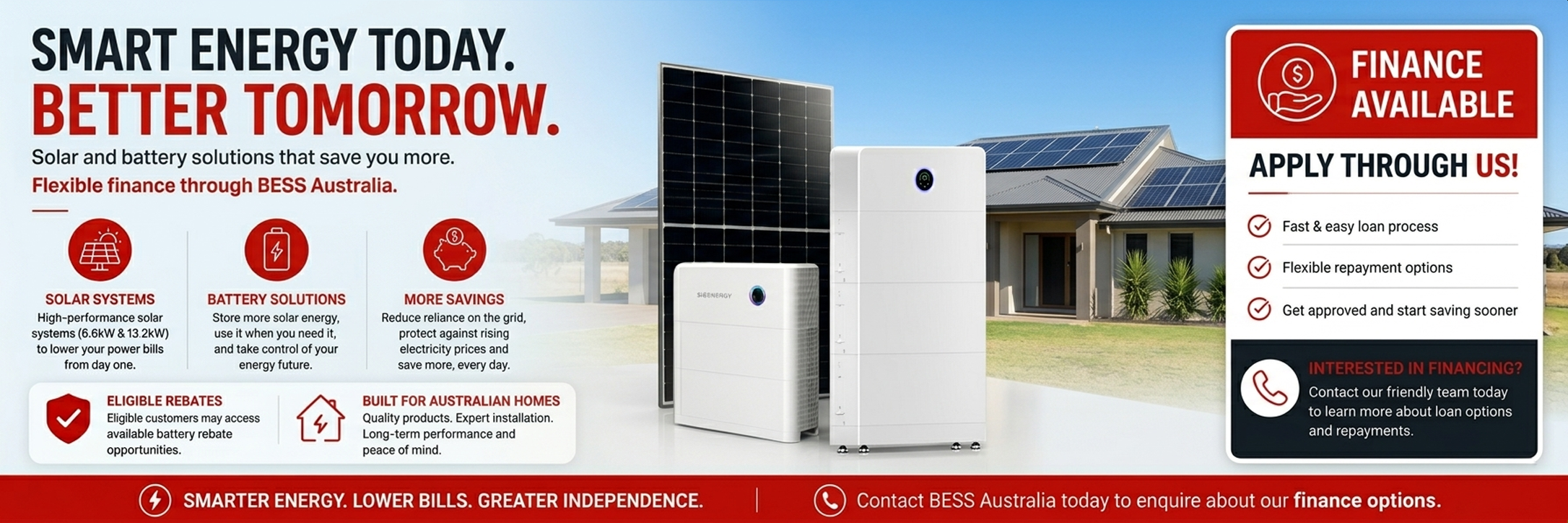

The Australian home battery market entered a new phase on 1 May 2026, with significant updates to the Federal Government's battery incentive program. While rebates are still available, the way they are calculated has changed, making battery sizing more important than ever.
Understanding the New Battery Rebate Rules
The Federal battery incentive is delivered through Small-scale Technology Certificates (STCs), which provide an upfront discount on eligible battery installations.
From 1 May 2026, two key adjustments were introduced:
Faster Rebate Reductions
The STC factor now decreases every six months instead of once per year. This means the rebate value gradually declines throughout the life of the program, rewarding earlier installations.
Capacity-Based Rebate Tiers
Rather than applying the same rebate rate across all battery sizes, the incentive now follows a tiered structure:
| Battery Capacity | STC Factor Applied |
|---|---|
| 0–14 kWh | 100% |
| 14–28 kWh | 60% |
| 28–50 kWh | 15% |
This approach aims to align incentives with typical household energy needs while maintaining the long-term sustainability of the rebate program.
Choosing the Right Battery Size
The rebate changes highlight the importance of selecting a battery based on actual energy usage rather than simply choosing the largest available system.
When determining battery size, homeowners should consider:
- Daily electricity consumption
- Existing solar generation
- Electric vehicle charging requirements
- Time-of-use electricity tariffs
- Future energy needs
For many households, a battery between 10 kWh and 14 kWh can deliver excellent performance while still attracting the highest rebate level.
The Long-Term Benefits Remain Strong
Even with reduced incentives for larger batteries, the economics of battery storage remain attractive due to:
- Increasing electricity prices
- Lower battery costs
- Greater energy independence
- Improved solar utilisation
- Potential VPP revenue opportunities
The rebate program continues through 2030, although the value of incentives is expected to decrease progressively over time.
Final Thoughts
The 2026 rebate changes don't signal the end of battery savings. Instead, they encourage smarter battery sizing and more efficient energy management.
For homeowners considering battery storage, understanding your energy consumption profile is now more important than ever. A properly sized system can deliver substantial savings, increase self-sufficiency, and help future-proof your home against rising energy costs.
Speak with a trusted battery specialist to find the right solution for your property and take advantage of available incentives while they remain available.
If you're considering battery storage in 2026, now is an excellent time to explore your options and secure long-term energy savings.
Contact BESS Australia today for expert advice and competitive battery solutions.
