Quick answer: The Solar Sharer Offer is a new Australian Government scheme that gives eligible households up to 24 kWh of free electricity during a 3-hour window in the middle of the day, available from 1 July 2026 in South East Queensland, New South Wales and South Australia. To benefit you need a smart meter and you must opt in with your retailer — and for many homes the biggest savings come not from using power during those three hours, but from storing that midday energy in a battery to use during the expensive evening peak.
Free electricity sounds like an easy win, and for some households it is. But the headline hides the detail that decides whether the Solar Sharer Offer actually lowers your bill. This guide explains how the offer works, who's eligible, the catches to check, and how a battery can turn a midday freebie into year-round savings.
BESS Australia is an accredited, multi-brand supplier and installer of home battery systems, with supply-and-installation across Brisbane, the Sunshine Coast, the Gold Coast, Sydney and Melbourne — which covers nearly every region where these new free-power schemes apply.
The Solar Sharer Offer at a glance

|
Detail |
Solar Sharer Offer |
|
What you get |
Up to 24 kWh of free electricity in a 3-hour midday window |
|
Starts |
1 July 2026 |
|
Where |
South East Queensland, New South Wales, South Australia |
|
Free window |
11am–2pm (SEQ & NSW); 12pm–3pm (SA) |
|
Who can join |
Households with a smart meter — owners and renters, with or without rooftop solar |
|
How to access |
Opt in with your retailer (retailers with 1,000+ customers must offer it) |
|
Victoria |
A separate "Midday Power Saver" scheme starts 1 October 2026 |
What is the Solar Sharer Offer?
The Solar Sharer Offer is a regulated Australian Government electricity offer that provides eligible households with at least three hours of free electricity in the middle of the day, when solar generation across the grid is at its peak. It's part of reforms to the Default Market Offer — the framework the Australian Energy Regulator (AER) uses to safeguard households on standard electricity plans.
A few key points define it. You can use up to 24 kWh of free electricity during the daily window — a cap designed to cover the needs of a family of five. You don't need your own rooftop solar to join, and it's open to both owners and renters. Crucially, it does not make your whole bill free: you still pay for electricity used outside the window, plus your daily supply charge.
A smart meter — a digitally read meter that records your usage in short intervals and sends it to your retailer remotely — is required, because the offer depends on the retailer knowing exactly when your power is used.
When does it start, and where?
The Solar Sharer Offer is available from 1 July 2026 in South East Queensland, New South Wales and South Australia, with the free window set at 11am–2pm in SEQ and NSW, and 12pm–3pm in South Australia. Retailers with more than 1,000 customers in these regions are required to offer at least one eligible plan; smaller retailers may not.
If you're in Victoria, the Solar Sharer Offer doesn't apply — but a similar state scheme, the Midday Power Saver, begins on 1 October 2026. For BESS Australia customers, that means our Brisbane, Sunshine Coast, Gold Coast and Sydney households fall under the Solar Sharer Offer, while our Melbourne customers can look to the Midday Power Saver. Either way, the same principle applies: there's now cheap or free midday energy on the table, and the smart move is capturing it.
Do I need a smart meter — and how do I check?

Yes — a smart meter is required for the Solar Sharer Offer, and a plain digital display is not enough to confirm you have one. A smart meter is read remotely and records usage in intervals; a basic electronic or "digital" meter may look similar but still needs manual reading and won't support the offer.
The most reliable way to check is to ask your electricity retailer, who can confirm your meter type on the spot. If you'd like to look yourself, a few indicators help:
- Display: smart meters use a digital LCD/LED screen — no spinning dials or mechanical counters.
- Communication: look for a small antenna, communications module, or blinking network light, since smart meters transmit data remotely.
- Two-way flow (if you have solar): the screen may cycle through readings labelled IMP (electricity imported from the grid) and EXP (solar exported to the grid).
- In-home display: some setups include a small monitor showing real-time usage.
If you don't have a smart meter, ask your retailer whether they can arrange one and whether any fees apply — costs vary by retailer, so confirm before you commit.
Thinking about a battery before July? Find out how a battery could turn your free midday power into evening savings — call 1300 859 066, email sales@bessaustralia.com.au, or request a tailored quote.
How much is actually free? (Read the whole plan)
Only the energy you use during the 3-hour window — up to 24 kWh a day — is free; everything else on the plan is charged as normal, so a free window doesn't automatically mean a cheaper bill. This is the part most households miss.
Some plans that advertise a free period may pair it with higher peak rates, different shoulder rates, a lower solar feed-in tariff, or daily caps. A plan with three free hours can still cost more overall if the rest of the structure doesn't suit your home. Before switching, compare the entire plan — not just the headline — using the AER's free Energy Made Easy comparison tool, which can also help you check eligibility and smart-meter details.
The takeaway: the Solar Sharer Offer isn't a discount on your whole bill. It's a reward for using electricity when the grid has abundant, cheap solar — and that only pays off if your home can actually shift usage into that window.
The real opportunity: use the free window to cut your evening bill
For most households, the biggest savings from the Solar Sharer Offer don't come from using power during the free hours — they come from using those hours to reduce the power you buy at expensive times. The 11am–2pm window lands squarely in the middle of the workday, when many homes are empty.
So the better question isn't "how do I use free power at lunchtime?" It's "how do I use that lunchtime window to lower my evening costs?" There are two practical answers.
1. Shift big appliances into the window — even without a battery. Many energy-hungry appliances have delay-start or scheduling functions, so you can run them automatically while power is free or cheap. Good candidates include pool pumps, hot-water systems, dishwashers, washing machines and dryers, and a home EV charger set to charge midday rather than overnight. This works best for households with daytime loads to shift.
2. Store the energy for later — with a battery. This is where the offer becomes genuinely powerful for the majority of homes that are out during the day.
Why a battery makes the Solar Sharer Offer pay off
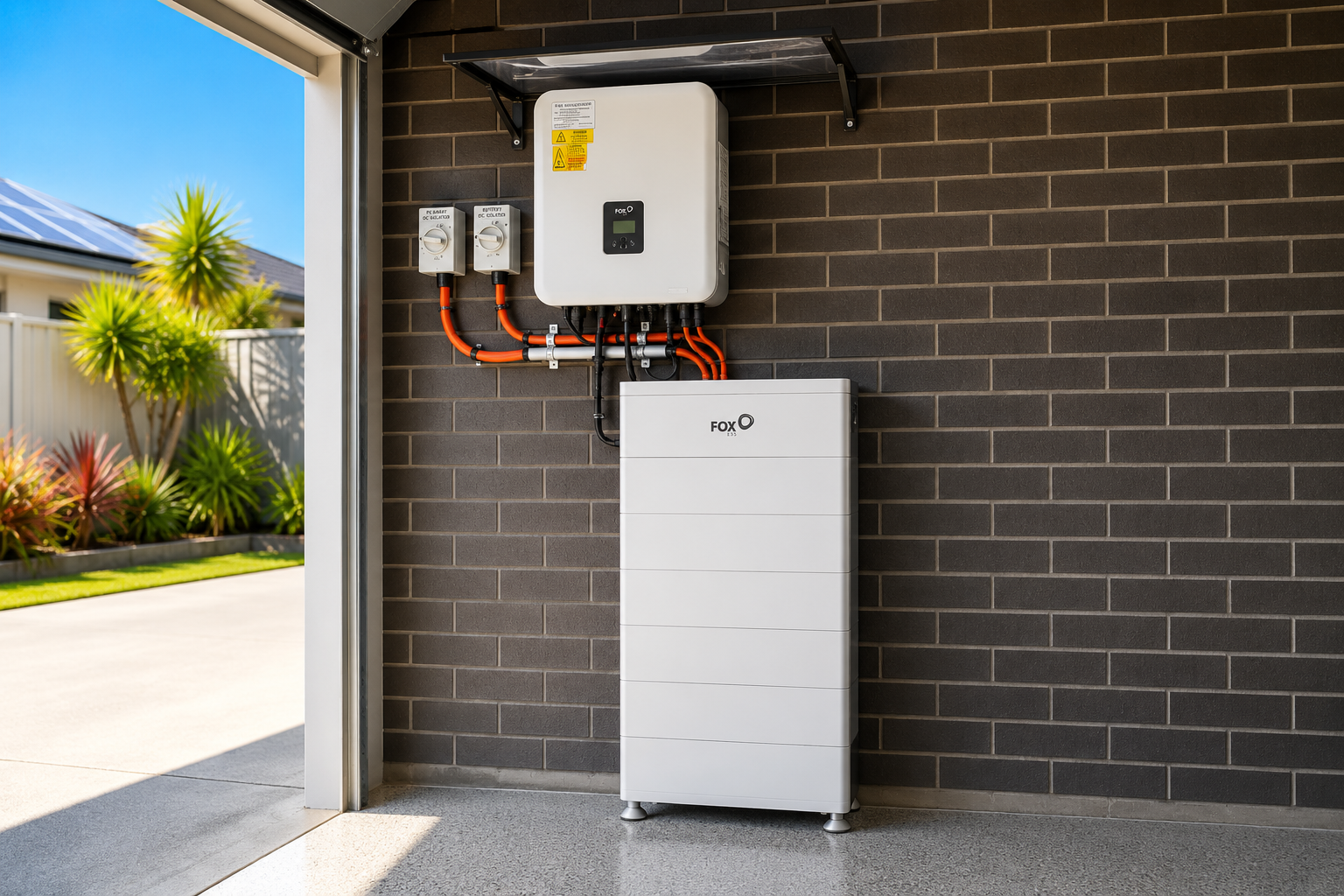
A home battery lets you capture cheap or free midday energy — from your solar or, where your plan allows, from the grid during the free window — and use it in the evening peak, when grid electricity is most expensive. Instead of trying to consume power while it's available, you bank it for when you actually need it.
That changes the equation for households that aren't home midday. With a battery you can charge during the day (from rooftop solar and, depending on your plan, the free window), then discharge through the evening to cut your reliance on high-cost peak power. It also adds blackout backup (configuration-dependent) and greater energy independence.
There's a further point worth knowing: a battery isn't only useful when you have surplus solar to store. On cloudy days, in winter, or in homes with limited roof space or high daytime self-consumption, a battery gives you another way to stockpile low-cost daytime energy. If your roof can take more generation as well, pairing storage with the right solar panels lets the battery charge from your own free sunshine first.
Whether a battery stacks up depends on your usage, occupancy, solar, plan and future EV plans — so the savings should always be modelled against your real numbers, not a generic average. They're estimates that depend on your household, never guarantees.
What to watch out for
Before changing plans or buying a battery, check three things: your full electricity plan, your home's electrical phase, and your battery's fit to your existing system. Each affects how much you'll actually benefit.
On the plan, watch the peak rate, feed-in tariff and any caps, as above. On phase, most Australian homes are single-phase and can comfortably run appliances and charge a battery during the window, while three-phase homes can draw more power at once — useful for EV charging, large air-conditioning or bigger batteries, though the 24 kWh cap still applies. And on the battery itself, compatibility with your inverter and switchboard should be confirmed by a site assessment rather than assumed. Rebate and offer eligibility also depend on the product, the installation and current rules.
How BESS Australia helps you make the most of it
BESS Australia is an accredited supplier and installer of home battery, solar and EV-charging systems across Brisbane, the Sunshine Coast, the Gold Coast, Sydney and Melbourne, offering complete supply-and-install battery packages as well as equipment-only supply Australia-wide. Because we carry an extensive range of tier-1 brands — including GoodWe, Fox ESS, Sigenergy, Tesla, BYD and Sungrow — under one roof, we can match a system to your home and your plan rather than to a single manufacturer's lineup.
Our trust signals are straightforward: CEC-approved products, Smart Energy Council membership, the NETCC Approved Seller consumer-protection code, installation by installers accredited under Solar Accreditation Australia, manufacturer warranties, a workmanship warranty, and Australian Consumer Law protections. We also offer a Lowest Price Guarantee, finance options and rebate assistance. A battery rebate can stack with the savings approach above — the Australian Government's Cheaper Home Batteries Program provides a discount toward eligible installations, and that discount reduces over time through to 2030, so getting accurate advice sooner can be worthwhile. Eligibility depends on the product, install and current rules.
Get ahead of 1 July. Ask BESS Australia how a battery could turn your free midday window into lower evening bills — call 1300 859 066, email sales@bessaustralia.com.au, or use our request a tailored quote form. We'll look at your usage, your plan and your existing solar, then recommend the right way to capture the value.
FAQ
What is the Solar Sharer Offer? The Solar Sharer Offer is an Australian Government scheme giving eligible households up to 24 kWh of free electricity during a three-hour midday window. It starts on 1 July 2026 in South East Queensland, New South Wales and South Australia, requires a smart meter, and is opt-in through your retailer. It's open to owners and renters, with or without rooftop solar.
Do I need a smart meter for the Solar Sharer Offer? Yes. A smart meter — read remotely in short intervals — is required, and a basic digital meter isn't enough. The easiest way to confirm is to ask your retailer. If you don't have a smart meter, ask whether one can be installed and whether any fees apply, as costs vary between retailers.
How can I benefit if I'm not home during the free window? The most effective approach is to store the midday energy in a home battery and use it in the evening peak, when power costs the most. You can also schedule big appliances — pool pumps, hot water, dishwashers, EV chargers — to run automatically during the window using delay-start timers.
Is the Solar Sharer Offer worth it? It depends on your plan and usage. Only the 24 kWh used during the window is free; you still pay for power outside it plus the supply charge, and some plans offset the free hours with higher peak rates or lower feed-in tariffs. Compare the whole plan on Energy Made Easy, and consider a battery to capture the value.